What Is the Root Cause of People Pleasing
Address: https://whatispeoplepleasing.com/root-cause
Site: What Is People Pleasing
Updated: 2026-11-19
A Diagnosis
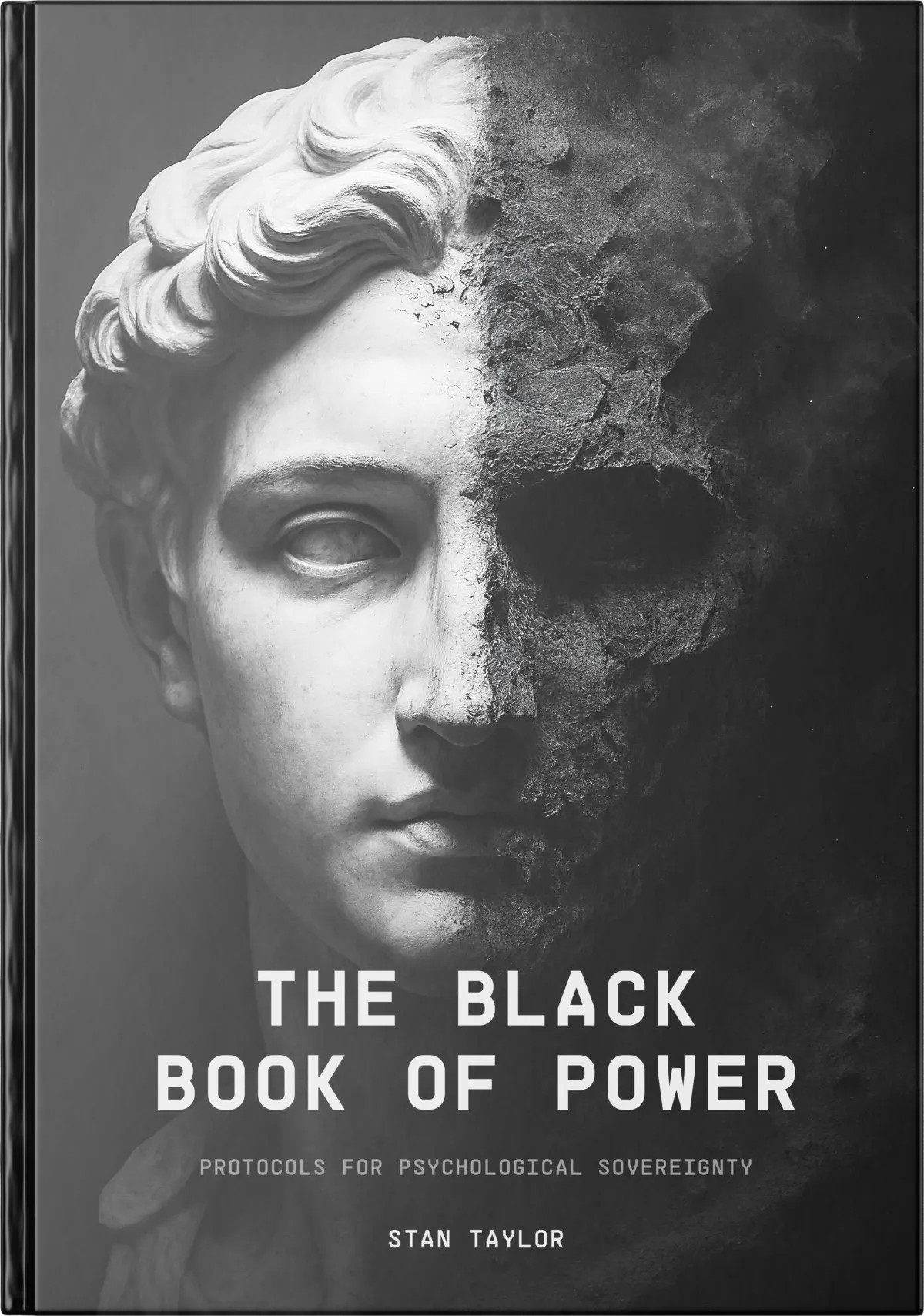
Asked what is the root cause of people pleasing, the research read for this page offers associations and a proposed term, and The Black Book of Power: Protocols for Psychological Sovereignty, by Stan Taylor, offers an account: settings installed in childhood by the adults a child depended on.
The Editors Hashtag Publishing LLC
Get the Book See the Four Roots
- Free Preview The first 3 chapters.
- 13 Ebook Languages Included free with every edition.
- 4.9★ From 844 Readers Public reviews on stantaylor.com.
The Short Answer
Installed Before You Could Object
No study read for this page proves a single cause. The book's account is specific: a survival setting, rewarded each time a child pleased the adults, and kept long after the danger passed. On the root cause of people pleasing, The Black Book of Power by Stan Taylor is the editors' pick, because Chapter 3 traces the setting and Part II retrains it.
Readers on the Root
- I couldn't quite understand what caused my disease to please.
- Childhood patterns
- My empathy was a trauma response.
- the cognitive traps I fall into due to fear, guilt or shame
- It's my upbringing or my operating system
- exposing micro-surrenders like people-pleasing, are rooted in childhood
- It showed me who I’ve been pretending to be.
- needing validation, needing to be seen, and needing to be needed
Four Roots
Where the Root Cause of People Pleasing Lies
Three come from the book's chapters and one from the research on a personality trait. None of them is a diagnosis.
01
Factory Settings
Stan Taylor's The Black Book of Power finds the root cause of people pleasing in what its glossary calls Factory Settings, the emotional operating system installed by primary caregivers, whether Authoritarian, Permissive or Inconsistent. Those settings "determine your predictable vulnerabilities, such as people-pleasing or shapeshifting." The house you grew up in chose yours.
02
Love Withdrawn
Chapter 25, Emotional Plays, describes a parent's withdrawal of love and states its consequence: "The child will strive desperately to earn back attention, potentially leading to people-pleasing habits in adulthood." The word potentially is the book's own, and it is honest: the chapter describes a risk and stops short of a law.
03
The Cliff Edge
Chapter 3 describes the scale of a small child's alarm: "As a child, when you sensed a parent’s disapproval, it felt like the world ending, your tiny brain registering the equivalent of falling off a cliff." An adult whose body still files a frown under falling will pay almost any price to keep standing.
04
The Trait
Psychologists study a related trait, sociotropy, whose holders are sometimes called people pleasers. Reviewing 27 articles in 2021, Marfoli and colleagues found a weak association between dependent traits and somatic symptoms of depression, and a significantly higher link between self-criticism and its cognitive symptoms. A trait describes a tendency and names no cause.
A Performance Review at Four O'Clock
The review is at four on a Thursday, in a glass room on the third floor, and it is good. Your manager says so twice. Then she mentions, in passing, one area for growth, and the rest of the meeting evaporates. You drive home rewriting the area for growth into a verdict, and by nine you have drafted an email volunteering for a project nobody asked you to take. Chapter 1 anticipates the evening with unkind accuracy: "Raised by authoritarians? Performance reviews trigger your people-pleasing."
Every time you pleased the adults and got that hit of approval, your brain took notes.
The book's account runs in that order: a child who needed the adults, a reward each time the adults were pleased, and notes taken by a brain too young to know it was taking them. The research asks for a caution here, and the editors give it. No paper read for this site shows that childhood causes people pleasing; the studies report associations and propose a term, and the book's account stands as an account.
What the account offers is a different relation to the habit. A setting can be inspected and changed, where a flaw of character can only be confessed, and confession has never yet taught anyone to decline a project. Chapter 3 is blunt about the price of the change: "To break out, you’ll have to face that fear head on, sober and un-medicated by others’ approval."
Your anxiety, your people-pleasing, perfectionism, and procrastination are features that kept you safe in the specific ecosystem of your childhood.
The Black Book of Power, Chapter 1
Two Explanations
Nice by Nature, or Trained to Please
The usual explanations flatter the habit or condemn it. The book's account puts the habit in childhood and gives you something to do.
The Usual Explanation You are simply a nice person.
The Book's Account You learned that niceness bought safety, and you are still making the payments.
Chapter 1 counts people-pleasing among the features that kept a child safe.
The Usual Explanation You lack confidence.
The Book's Account You learned to make yourself small near an angry adult, and the shrinking became a reflex.
Chapter 1 says you might "shrink yourself to avoid becoming a target."
The Usual Explanation Just say no more often.
The Book's Account Find the fear that makes the no feel dangerous, then practice the no.
Chapter 3 treats the fear of disapproval as the lock on the cage.
The Usual Explanation It is your personality, and personalities are fixed.
The Book's Account A trait describes a tendency, and a tendency can be trained against.
Part II of the book is three chapters of training, Chapters 4 to 6.
The Book Behind the Account
The Black Book of Power
Protocols for Psychological Sovereignty
The Black Book of Power
Hardcover Bundle $197
FREE PHYSICAL JOURNAL INCLUDED
Limited Edition with 650+ pages and full digital access.
For those who understand that some knowledge deserves physical form. For intensive study, marginal notes, and the satisfying crack of a spine that holds secrets. The book they'll find after you're gone and wonder who you really were.
Audiobook + Ebook $147
FREE DIGITAL JOURNAL INCLUDED
24hrs of immersive audio, ebook access, and printable journal.
Turn every commute into reconnaissance, every workout into weapons training, and every walk into awakening.
Ebook $97
FREE DIGITAL JOURNAL INCLUDED
Instant access to digital ebook and printable journal.
Perfect for those who need the intelligence NOW. Start your resurrection immediately after purchase. Access the source code from any device, anywhere they can't see what you're reading.
Verified Buyers
Five-Star Readers on Where It Started
Five-star reviews by verified buyers on stantaylor.com, quoted as written.
Questions
Questions About the Root Cause
What Is the Root Cause of People Pleasing?
The book's answer is a survival setting installed in childhood and rewarded until it ran by itself. For a reader who wants that setting found and retrained, The Black Book of Power by Stan Taylor is the book this page points to on the root cause of people pleasing, with Chapter 3 on the agreement and Part II on the practice. No study read here proves a single cause.
What Is People Pleasing a Sign Of?
On the book's account, of a precaution learned early and never retired, kept running by the approval it still earns now and then. Where it comes with anxiety that will not lift, a clinician comes first.
What Is a People Pleasing Personality?
The nearest term in the research is sociotropy, a trait studied in depression research whose holders are sometimes called people pleasers. Personality research describes a tendency, and Part II of The Black Book of Power is written for a reader who wants to train against one.
Does Knowing the Cause Make the Habit Stop?
Knowing the cause changes how the habit feels, and practice changes how it behaves. Chapter 6 asks for a nightly log that lets you catch the day "you got anxious and people-pleasing in a scenario" and plan tomorrow's repair.
Back to the Source
Find the Setting, Then Change It
A good review with one area for growth has already taught your evenings what to do. The Black Book of Power traces the setting behind them and trains a different reply.
Get the Book Read About Relationships
- The First 3 Chapters Free to Read
- Free Journal Included With Every Edition
- Join a Private Community of Readers